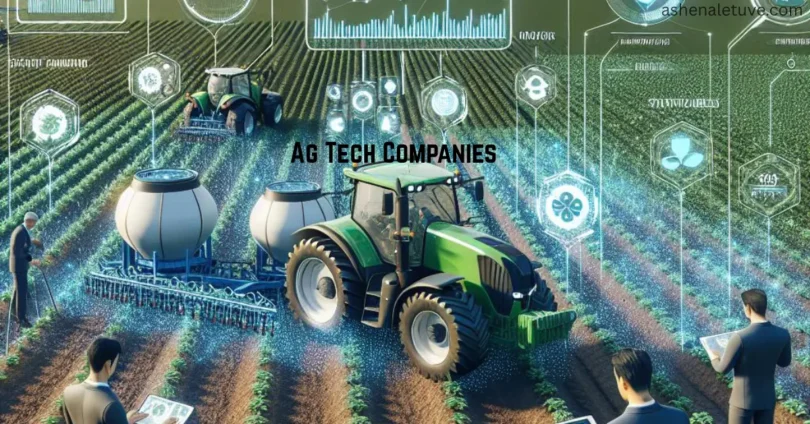
Agricultural technology, often called Ag Tech, is changing the way we grow food. Ag Tech companies create smart tools, machines, and software to help farmers work faster, grow more crops, and use fewer resources.
From drones that watch over fields to apps that track soil health, these companies are making farming smarter and more efficient. Today, Ag Tech is not just about technology it is about feeding the world in a better, cleaner, and more sustainable way.
Types of Ag Tech Companies
Ag Tech companies use different tools and technology to make farming smarter and easier.
- Precision Farming Companies: Use drones, sensors, and GPS to monitor crops and improve productivity.
- Agri-Robotics Companies: Build robots and automated machines for planting, harvesting, and farm work.
- Biotechnology Companies: Develop better seeds, improve crop resistance, and enhance growth using science.
- Farm Management Software Companies: Create apps and software to track crops, soil, irrigation, and livestock.
- Sustainable Farming Solutions: Focus on eco friendly methods to save water, reduce chemicals, and protect the environment.
Each type of Ag Tech company helps farmers grow more food efficiently and sustainably.
Key Technologies Used in Ag Tech
Ag Tech uses many smart technologies to make farming easier, faster, and more efficient.
- Drones and Aerial Imaging: Fly over fields to check crop health, detect pests, and monitor growth.
- IoT (Internet of Things) Devices: Sensors in soil, water, and crops help farmers track farm conditions in real-time.
- AI and Machine Learning: Analyze data to predict crop yields, detect diseases, and make better decisions.
- GPS and Precision Mapping: Guide tractors and machines for accurate planting and resource use.
- Blockchain Technology: Helps track crops from farm to table for transparency and safety.
- Automated Irrigation Systems: Save water by watering crops only when needed using smart sensors.
These technologies help farmers save time, reduce costs, and grow healthy crops more efficiently.
Benefits of Ag Tech Companies
Ag Tech companies make farming smarter, easier, and more productive for farmers around the world.
- Increase Crop Productivity: Help farmers grow more food using better technology and methods.
- Save Time and Labor: Machines, robots, and smart tools reduce manual work on farms.
- Cost Efficiency: Reduce waste and lower farming costs with precise planning and monitoring.
- Sustainable Farming: Promote eco-friendly practices that save water, energy, and soil.
- Data-Driven Decisions: Provide farmers with information to make better choices for planting, irrigation, and harvesting.
- Reduce Risks: Detect pests, diseases, and weather issues early to prevent crop loss.
Ag Tech companies help farmers grow food more efficiently, sustainably, and safely.
Challenges Faced by Ag Tech Companies
Although Ag Tech is changing farming, companies face several problems while bringing new technologies to farms.
- High Initial Costs: Advanced machines, software, and sensors require large investments.
- Farmer Resistance: Some farmers prefer traditional methods and hesitate to adopt new technology.
- Data Security Issues: Collecting farm data can create privacy and security concerns.
- Technical Complexity: Not all farmers can easily use or maintain high-tech equipment.
- Infrastructure Limitations: Rural areas may lack internet, electricity, or tools needed for smart farming.
- Regulatory Challenges: Different countries have strict rules for biotech, chemicals, or automated systems.
Despite these challenges, Ag Tech companies continue to innovate and find solutions to help farmers worldwide.
Top Ag Tech Companies Around the World
Some Ag Tech companies are leading the way with smart tools, software, and innovations that help farmers globally.
- John Deere: Famous for smart tractors, GPS-guided machinery, and precision farming solutions.
- Bayer Crop Science: Develops seeds, crop protection products, and biotechnology solutions.
- Indigo Ag: Uses data and microbes to improve crop yield and soil health.
- Trimble Agriculture: Provides GPS, mapping, and farm management software for precision farming.
- Ceres Imaging: Offers aerial imagery and analytics to monitor crop health and irrigation needs.
- AG Leader Technology: Creates innovative hardware and software for planting, spraying, and data management.
These companies are shaping the future of farming with technology, making agriculture more efficient and sustainable.
How Ag Tech Companies Are Changing Farming
Ag Tech companies are transforming farming by introducing smarter tools and modern techniques.
- Improved Crop Monitoring: Use drones and sensors to detect problems early, like pests or nutrient shortages.
- Efficient Resource Use: Help farmers save water, energy, and fertilizers with precision farming.
- Automation of Tasks: Robots and machines reduce manual labor in planting, harvesting, and other farm work.
- Better Decision Making: Data and analytics allow farmers to plan planting and harvesting more effectively.
- Higher Crop Quality and Yield: Advanced technologies ensure healthier crops and increased production.
- Sustainable Practices: Encourage eco-friendly farming methods that protect soil and the environment.
Ag Tech companies are making farming smarter, faster, and more sustainable for farmers everywhere.
Future Trends in Ag Tech
The future of Ag Tech is exciting, with new technologies set to change farming even more.
- Vertical Farming: Growing crops in stacked layers indoors to save space and water.
- Lab-Grown Crops: Using biotechnology to create food in labs for sustainability.
- AI-Driven Autonomous Farming: Fully automated tractors, drones, and robots managing farms.
- Smart Sensors and IoT Expansion: More precise monitoring of soil, weather, and crop health.
- Blockchain in Agriculture: Better tracking of food from farm to table for safety and transparency.
- Focus on Climate-Resilient Farming: Technology helping crops survive extreme weather and climate change.
Future Ag Tech will make farming more efficient, sustainable, and capable of feeding a growing world population.
Common FAQs about Ag Tech Companies
Some FAQs of Ag Tech Companies
What does Ag Tech mean?
Ag Tech stands for Agricultural Technology, which includes tools, software, and machines to improve farming.
Do Ag Tech companies only work with big farms?
No, Ag Tech solutions can be used by small, medium, and large farms depending on the technology.
How do Ag Tech companies help reduce waste?
By using precision tools and data, farmers apply only the right amount of water, fertilizer, or pesticides.
Can Ag Tech help with climate change?
Yes, smart farming techniques can reduce emissions, save water, and make crops more resilient to extreme weather.
Are Ag Tech tools expensive for farmers?
Some advanced tools are costly initially, but they save money in the long run through efficiency and better yields.
Do Ag Tech companies offer training to farmers?
Many companies provide support and training to help farmers use technology effectively.
How do Ag Tech companies improve food quality?
By monitoring soil, water, and crop health, they ensure healthier and safer produce.
Can Ag Tech companies work with organic farms?
Yes, many Ag Tech solutions focus on sustainable and organic farming practices.
Are Ag Tech companies only in developed countries?
No, they operate globally and are increasingly helping farmers in developing countries.
Will Ag Tech replace farmers?
No, technology assists farmers rather than replaces them, making farming easier, safer, and more efficient.
Conclusion
Ag Tech companies are not just about making farming easier they are shaping the future of global agriculture. By introducing innovative solutions, these companies are helping farmers adapt to changing climates, fight plant diseases faster, and even predict market trends for better profits.
They are creating opportunities for young entrepreneurs, improving rural economies, and supporting research in sustainable food production. In short, Ag Tech companies are transforming farming into a smart, modern, and resilient industry that can meet the needs of the world for years to come.